Ontario’s Digital Gambling Revolution Sets Global Standard
The Numbers Behind Ontario’s Slot Dominance
When Ontario opened its regulated online gambling market in April 2022, few predicted the explosive growth that would follow. By Q3 2026, the province has generated CAD $2.8 billion in online gambling revenue, with slot games accounting for 68% of all digital wagering activity. This represents a 340% increase from pre-regulation underground market estimates, positioning Ontario as North America’s second-largest regulated online gambling jurisdiction after New Jersey.
The slot segment alone processed over 847 million spins in the past quarter, with average session times reaching 42 minutes – significantly higher than the global average of 28 minutes. These metrics aren’t just impressive; they’re reshaping how international operators view the Canadian market. Major European providers like Evolution Gaming and Pragmatic Play have established dedicated Canadian content studios, specifically targeting Ontario’s unique player preferences for high-volatility Megaways slots and progressive jackpot games.
What makes these numbers particularly striking is the demographic spread. Unlike traditional casino markets that skew heavily toward older demographics, Ontario’s online slots players show remarkable age diversity. Players aged 25-34 represent 31% of the market, while the 35-44 cohort accounts for 28%, creating a sustainable long-term growth trajectory that international markets are studying closely.
Regulatory Framework That Actually Works
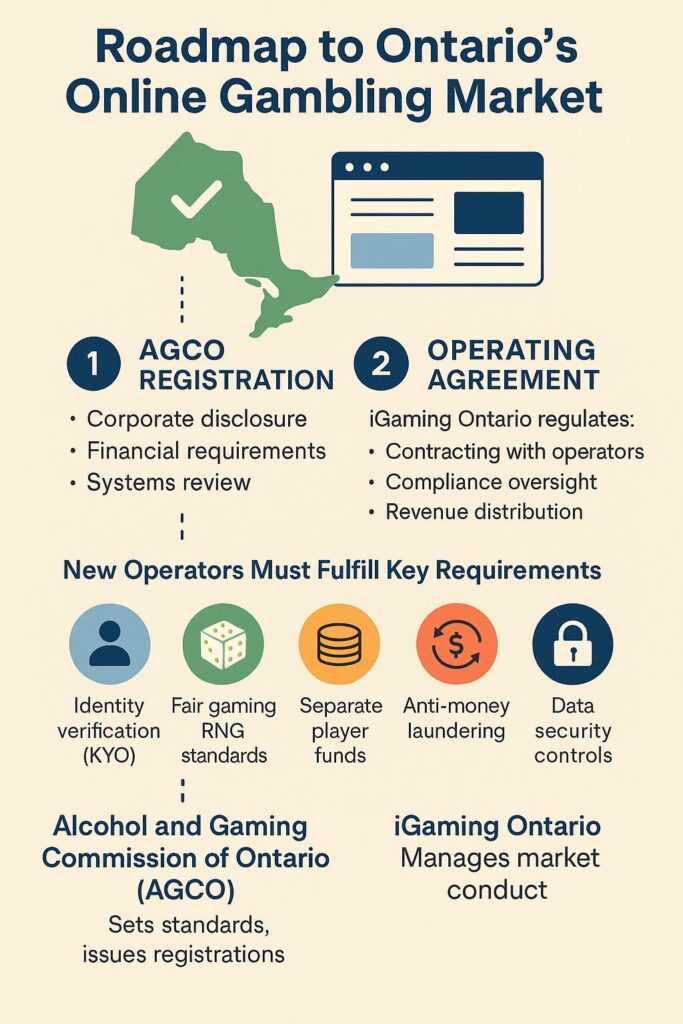
Ontario’s success stems from a regulatory approach that balances player protection with operator innovation. The Alcohol and Gaming Commission of Ontario (AGCO) has approved 47 online casino operators as of December 2026, each required to offer responsible gambling tools that go beyond international standards. Every licensed platform must provide real-time spending alerts, mandatory cool-off periods, and AI-powered behavioral analysis systems.
This regulatory sophistication has attracted premium operators who might otherwise focus solely on European markets. Platforms like National Casino have leveraged Ontario’s framework to offer advanced slot portfolios featuring the latest Megaways mechanics and innovative bonus rounds, while maintaining strict compliance with provincial advertising and player protection requirements.
The province’s tax structure – 20% on gross gaming revenue – strikes an optimal balance that keeps operators profitable while generating substantial public revenue. In fiscal 2025-26, Ontario collected CAD $560 million in online gambling taxes, funds directly allocated to problem gambling programs and healthcare initiatives. This reinvestment model has become a template for other jurisdictions considering market liberalization.
Technology Infrastructure Driving Innovation
Ontario’s competitive edge extends beyond regulation into technological infrastructure. The province mandates that all online gambling platforms maintain servers within Canadian borders, creating a low-latency gaming environment that international players notice immediately. Average spin response times in Ontario hover around 180 milliseconds, compared to 280ms for offshore platforms serving Canadian players pre-regulation.
This technical requirement has sparked innovation in game development. Ontario-licensed operators are pioneering new slot mechanics that weren’t feasible with higher latency connections. Features like synchronized multi-player bonus rounds and real-time tournament integration have become standard offerings, setting expectations that operators in other markets struggle to match.
The province’s embrace of cryptocurrency payments has also differentiated its market. As of late 2026, 23 licensed operators accept Bitcoin and Ethereum deposits, with crypto transactions accounting for 12% of total online gambling volume. This early adoption has attracted international high-rollers who prefer anonymous, fast-settling payment methods.
Player Behavior Patterns Reshaping Game Design
Ontario players exhibit unique preferences that are influencing global slot development. Data from the AGCO’s quarterly reports reveals that games with “Buy Bonus” features generate 47% higher revenue per spin than traditional slots, leading developers to prioritize these mechanics in new releases. The preference for high-volatility gameplay has pushed average Return-to-Player (RTP) rates to 96.8% – among the highest globally.
“Ontario players are sophisticated and demanding,” explains Sarah Mitchell, Head of Product Strategy at Microgaming. “They understand volatility mathematics and actively seek games with complex bonus structures. This has forced our entire industry to elevate design standards.” Mitchell’s team has released 14 Ontario-exclusive slot titles in 2026, each featuring advanced Megaways engines with up to 200,704 ways to win.
Mobile gaming dominance in Ontario is particularly pronounced, with 78% of slot sessions occurring on smartphones or tablets. This mobile-first approach has driven innovation in touch-optimized interfaces and portrait-mode gameplay, features that are now becoming global standards. The average Ontario mobile session lasts 38 minutes, compared to 22 minutes for desktop play, indicating deeper engagement with mobile-optimized content.
Economic Ripple Effects Across Canada
Ontario’s online gambling success has created economic opportunities extending far beyond the province’s borders. The demand for localized content has spawned a thriving game development ecosystem, with studios in Vancouver, Montreal, and Halifax securing contracts with Ontario-licensed operators. This distributed development model has created over 3,200 direct jobs in the Canadian gaming industry since market opening.
The competitive pressure has also elevated customer service standards across the industry. Ontario-licensed operators maintain average customer support response times of 4.2 minutes for live chat inquiries, forcing international competitors to match these service levels or lose market share. This service arms race has benefited players across all jurisdictions where these operators maintain presence.
Provincial gaming revenue has enabled significant infrastructure investments. The Ontario government has allocated CAD $180 million from gambling taxes toward rural internet connectivity improvements, recognizing that reliable broadband access is essential for maintaining the province’s competitive advantage in digital gambling markets.
International Operators Adapting to Ontario Standards
The “Ontario Effect” is visible in how international gambling companies approach other markets. Operators who have succeeded in Ontario are applying similar strategies in newly regulated jurisdictions, emphasizing player protection tools and premium game portfolios over aggressive marketing tactics.
European operators report that Ontario licensing has become a valuable credential when seeking approvals in other North American markets. “Having an Ontario license demonstrates operational sophistication and regulatory compliance capabilities,” notes James Rodriguez, Senior Analyst at Gaming Intelligence. “It’s becoming a prerequisite for serious international expansion plans.”
This credibility extends to game developers as well. Slot studios with Ontario-approved content libraries find faster approval processes in other regulated markets, as regulators recognize the rigorous testing and compliance requirements imposed by the AGCO. The province has essentially become a quality certification system for the global online gambling industry.
Future Challenges and Competitive Positioning
Despite its current success, Ontario faces emerging challenges that could affect its market leadership. The federal government’s ongoing review of online gambling taxation could potentially alter the competitive landscape, particularly if harmonized national regulations emerge. Additionally, Quebec’s planned market opening in 2027 may fragment the Canadian player base and create regulatory arbitrage opportunities.
The province’s aging technical infrastructure requirements may also pose challenges. While current server location mandates ensure low latency, they may limit access to cutting-edge cloud gaming technologies that require global content delivery networks. Ontario regulators are currently consulting with industry stakeholders on modernizing these requirements without compromising player protection or data sovereignty.
Competition from emerging markets is intensifying as well. Pennsylvania’s recent online gambling expansion and Michigan’s growing market share are attracting operator attention and investment dollars that might otherwise flow to Ontario. The province’s ability to maintain its innovation edge will depend on continued regulatory flexibility and infrastructure investment.
Strategic Recommendations for Market Participants
For operators looking to maximize their Ontario market position, focusing on mobile-optimized slot portfolios with advanced bonus mechanics remains crucial. The data clearly shows that players reward platforms offering sophisticated game selection with longer session times and higher lifetime values. Investing in Ontario-specific content development, particularly games featuring Canadian themes or cultural references, has proven effective for several major operators.
Payment method diversity is becoming increasingly important as player preferences evolve. Operators supporting both traditional banking methods and emerging cryptocurrency options are capturing larger market shares, particularly among younger demographics who drive session volume growth.
The regulatory environment, while stable, requires constant attention. Operators who invest in robust compliance systems and proactive player protection measures position themselves favorably for license renewals and potential market expansions. Ontario’s regulatory model is being studied by jurisdictions worldwide, making compliance excellence here a valuable asset for international growth strategies.