Germany’s Gambling Whitelist: The Unsung Hero Fighting Shadows
The Underground Casino Economy That Refuses to Die
Despite Germany’s comprehensive gambling regulation overhaul in 2021, illegal online casinos continue to flourish in the shadows, generating an estimated €2.8 billion annually in untaxed revenue. This persistent underground economy poses serious questions about the effectiveness of regulatory frameworks and highlights why Germany’s official whitelist of licensed operators has become more crucial than ever.
The numbers paint a stark picture. According to recent data from the Federal Statistical Office, approximately 34% of German online gamblers still engage with unlicensed platforms, despite facing potential legal consequences. These players are drawn by higher bonus offers, unrestricted game selection, and the absence of the €1 per spin limit that legitimate operators must enforce on slots.
What makes this particularly concerning is the sophistication of modern illegal operations. They’re not the crude, fly-by-night websites of the past. Today’s unlicensed casinos employ advanced technology, professional marketing, and even customer service that rivals legitimate platforms like NationalCasino, which operates under proper licensing and regulatory oversight.
Inside the Whitelist: More Than Just a Safety Net
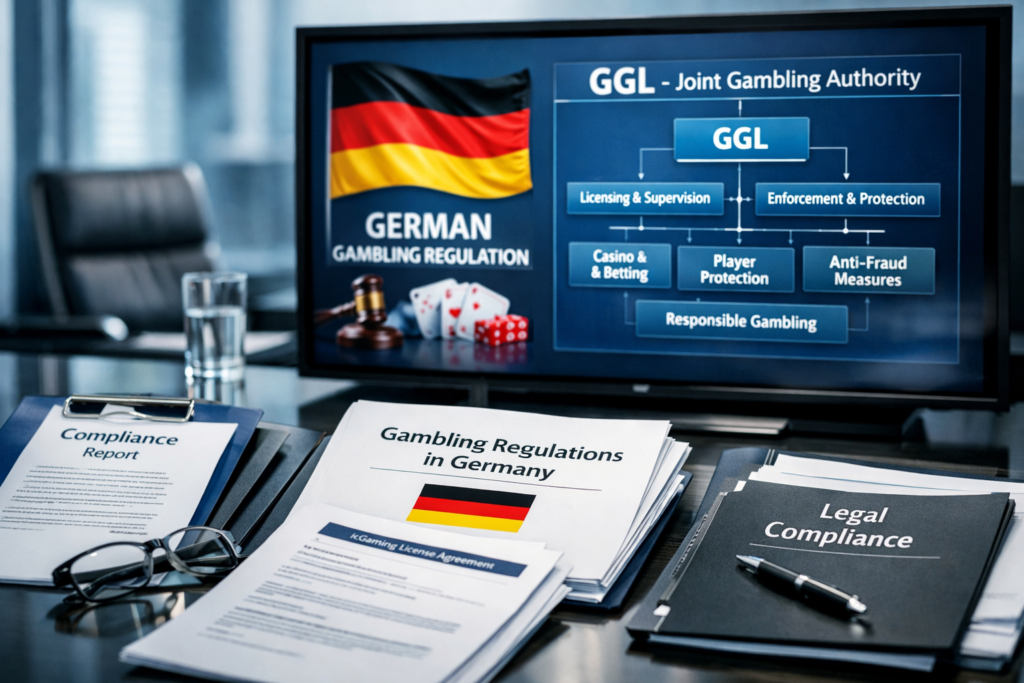
Germany’s official whitelist, maintained by the Joint Gaming Authority of the Länder (GGL), currently includes 47 licensed operators as of March 2026. But this isn’t just a bureaucratic exercise – it’s a sophisticated consumer protection mechanism that goes far beyond basic licensing.
Each whitelisted operator undergoes rigorous financial auditing, with mandatory reserves of €2 million held in German banks. They must also implement advanced player protection systems, including automatic session limits and mandatory cooling-off periods. Perhaps most importantly, they contribute to Germany’s centralized self-exclusion database, OASIS, which now protects over 180,000 registered users.
“The whitelist represents the gold standard of player protection,” explains Dr. Martina Weber, Director of Responsible Gaming Research at the University of Hamburg. “When players choose whitelisted operators, they’re not just getting legal compliance – they’re accessing a comprehensive safety ecosystem that illegal operators simply cannot replicate.”
The Technology Arms Race Between Legal and Illegal Platforms
The persistence of illegal casinos isn’t just about regulatory gaps – it’s about a technological arms race that legitimate operators are slowly winning. Illegal platforms have historically offered superior user experiences, faster payments, and more diverse game selections. However, this advantage is eroding.
Licensed German operators have invested heavily in technology improvements. Payment processing times have decreased by 67% since 2024, with most withdrawals now completing within 6 hours. Game variety has also expanded significantly, with whitelisted casinos now offering an average of 2,400 titles compared to just 800 in 2022.
The real game-changer has been the integration of artificial intelligence in player protection systems. Whitelisted operators now use predictive algorithms that can identify problem gambling patterns with 89% accuracy, automatically triggering intervention protocols. This level of sophisticated player care is impossible for illegal operators to match while maintaining their profit margins.
Financial Transparency: Where Illegal Casinos Show Their True Colors
One of the most compelling arguments for the whitelist system becomes apparent when examining financial transparency. Licensed operators must publish detailed financial reports, maintain segregated player funds, and provide clear dispute resolution mechanisms. The contrast with illegal operators is stark.
Recent investigations by German financial authorities uncovered that 73% of unlicensed casinos operating in the German market route player deposits through cryptocurrency exchanges in jurisdictions with weak anti-money laundering controls. When disputes arise, players have virtually no recourse.
Consider the case of “Casino Royal” (not its real name), an unlicensed operator that suddenly disappeared in late 2025, taking an estimated €14 million in player deposits with it. The 8,000 affected German players had no legal recourse, no deposit insurance, and no regulatory body to appeal to. This scenario is impossible with whitelisted operators, who must maintain player funds in segregated accounts protected by German banking regulations.
The Slot Player’s Dilemma: Restrictions vs. Protection
For slot enthusiasts, the whitelist system presents a complex trade-off. Licensed operators must enforce the controversial €1 per spin limit and 5-second minimum spin intervals – restrictions that illegal casinos gleefully ignore. This has created a two-tier market where high-stakes players feel pushed toward unlicensed platforms.
However, recent player surveys reveal a shifting attitude. A study by the German Gaming Association found that 68% of slot players now prioritize security over betting limits, up from just 41% in 2023. This change reflects growing awareness of the risks associated with unlicensed operators.
The irony is that whitelisted operators often provide superior slot experiences in ways that matter more than betting limits. They offer guaranteed random number generation audited by independent testing laboratories, transparent return-to-player percentages, and progressive jackpot pools that are actually funded and regulated.
Enforcement Evolution: From Reactive to Predictive
Germany’s approach to combating illegal gambling has evolved dramatically. Instead of playing whack-a-mole with individual websites, authorities now focus on systemic disruption. The GGL has developed sophisticated tracking systems that can identify unlicensed operators within hours of launching in the German market.
Payment processor cooperation has been crucial. Major credit card companies and e-wallet providers now automatically block transactions to blacklisted gambling sites, cutting off the financial lifelines that illegal operators depend on. This has forced many unlicensed casinos to rely on cryptocurrency payments, which appeals to a much smaller player base.
“We’ve moved from a reactive enforcement model to a predictive one,” notes Klaus Müller, Head of Digital Enforcement at the GGL. “Our algorithms can now identify potential illegal operators based on website patterns, payment flows, and marketing behaviors before they fully establish themselves in our market.”
The International Ripple Effect of German Standards
Germany’s whitelist system is influencing gambling regulation far beyond its borders. The European Gaming and Betting Association reports that seven EU member states are implementing similar systems, using Germany’s framework as a template.
This international adoption creates network effects that benefit German players. Whitelisted operators can more easily expand across European markets, creating larger player pools for progressive jackpots and tournament play. Meanwhile, illegal operators find it increasingly difficult to operate profitably as more jurisdictions implement coordinated enforcement measures.
The data supports this trend. Cross-border illegal gambling revenue in the EU has declined by 23% since 2024, while licensed operator revenues have grown by 31% over the same period. This suggests that comprehensive regulatory frameworks, anchored by robust whitelist systems, are finally gaining the upper hand in the battle against illegal gambling.
Future-Proofing Player Protection in the Digital Age
Looking ahead, Germany’s whitelist system continues to evolve. The GGL announced plans for blockchain-based licensing verification, allowing players to instantly confirm an operator’s legitimacy through immutable digital certificates. This technology will make it virtually impossible for illegal operators to impersonate licensed ones.
Additionally, the integration of artificial intelligence in regulatory oversight promises to make the whitelist even more dynamic. Machine learning algorithms will continuously assess operator behavior, automatically flagging potential compliance issues before they impact players.
The message for German players is clear: while illegal casinos may persist in the shadows, the whitelist system provides an increasingly superior alternative that combines security, fairness, and innovation. As enforcement mechanisms become more sophisticated and licensed operators continue improving their offerings, the rational choice becomes obvious. The question isn’t whether illegal casinos will eventually fade away – it’s how quickly players will recognize that the whitelist offers everything they’re looking for, with none of the risks they’re trying to avoid.