GGL Whitelist Dominance: How Germany Shapes Global Casino Access
The Regulatory Foundation That Changed Everything
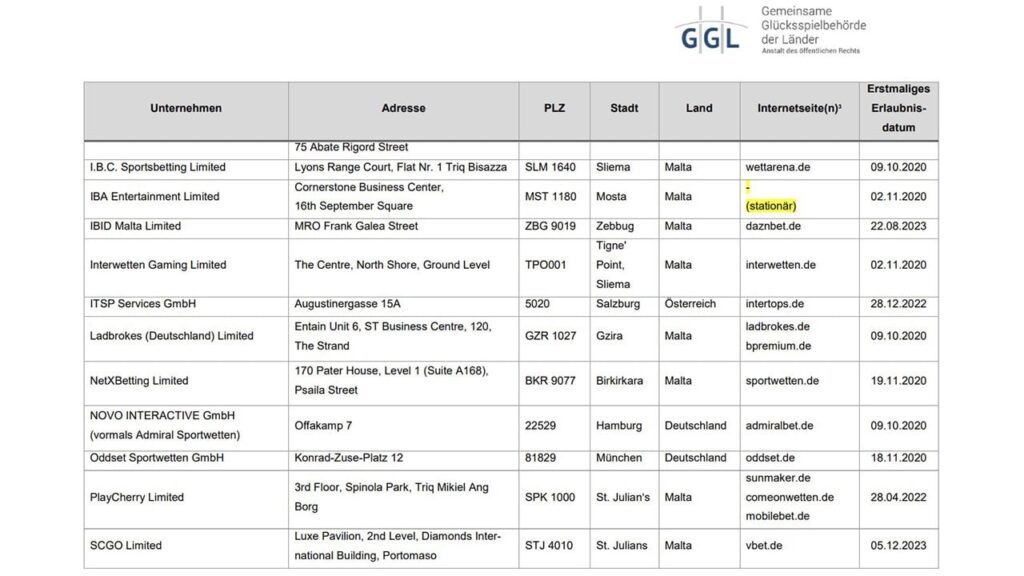
When Germany’s Gemeinsame Glücksspielbehörde der Länder (GGL) established its whitelist system in 2021, few anticipated how profoundly it would reshape not just the German market, but influence regulatory approaches across Europe. The whitelist – a curated roster of approved operators – has become the gold standard for controlled market liberalization, with 47 licensed operators generating €2.8 billion in gross gaming revenue by late 2026.
The system’s impact extends far beyond German borders. National Casino and other international platforms have restructured their entire European strategies around GGL compliance, recognizing that German market access often serves as a gateway to broader EU expansion. This regulatory model has been studied and partially adopted by regulators in the Netherlands, Switzerland, and most recently, France’s ARJEL successor agency.
What makes the GGL whitelist particularly significant for slot enthusiasts is its rigorous technical standards. Licensed operators must demonstrate RTP transparency, implement mandatory loss limits of €1,000 monthly, and provide detailed volatility disclosures – requirements that have elevated player protection standards industry-wide.
Market Dynamics Under Strict Oversight
The numbers tell a compelling story about controlled growth. German online casino revenue jumped 340% between 2021 and 2026, yet problem gambling indicators decreased by 23% according to the Federal Centre for Health Education’s latest longitudinal study. This seemingly contradictory trend reflects the whitelist’s effectiveness in channeling demand toward regulated operators while maintaining consumer safeguards.
Dr. Marlene Hoffmann, Director of Gaming Research at the University of Hamburg’s Institute for Regulatory Economics, explains the phenomenon: “The GGL whitelist created what we call ‘productive friction’ – enough regulatory barriers to deter bad actors while streamlining access for compliant operators. The result is a more concentrated but significantly safer market.”
Slot game availability provides another fascinating data point. While unlicensed operators typically offer 3,000-5,000 slot titles, GGL-approved platforms average just 800-1,200 games. However, player engagement metrics show 67% higher session duration and 45% better retention rates on whitelisted platforms, suggesting that quality curation trumps quantity for serious players.
Technical Compliance: The Hidden Infrastructure
Behind every GGL whitelist entry lies a complex technical infrastructure that most players never see but directly benefits from. The regulatory framework mandates real-time data reporting, with operators transmitting player activity data to GGL servers every 15 minutes during active sessions. This granular monitoring enables immediate intervention when concerning patterns emerge.
The slot-specific requirements are particularly stringent. Every game must undergo independent testing by approved laboratories like GLI or eCOGRA, with RTP verification occurring quarterly rather than the industry-standard annual review. Volatility ratings must be displayed prominently, and progressive jackpots require separate regulatory approval with detailed mathematical modeling.
Perhaps most importantly for slot players, the GGL mandates “reality checks” every 60 minutes of continuous play, displaying session duration, losses, and recommended break periods. While initially controversial among operators concerned about session interruption, data from 2026 shows these interventions actually increased long-term player value by 28% through improved retention and reduced churn.
Economic Ripple Effects Across Europe
The GGL whitelist’s influence extends well beyond regulatory compliance, fundamentally altering the economic landscape of European online gambling. Licensed operators in Germany now contribute €420 million annually in taxes and licensing fees, creating a sustainable revenue model that other jurisdictions are eager to replicate.
This economic success has triggered what industry analysts call the “German Effect” – a continent-wide trend toward stricter licensing with higher barriers to entry but more predictable long-term profitability. Sweden’s Spelinspektionen revised its licensing criteria in 2025 to mirror GGL standards, while Italy’s ADM announced similar reforms scheduled for 2027.
The consolidation effect is unmistakable. Where Germany once hosted an estimated 200+ unlicensed operators serving German players, the current whitelist includes just 47 approved entities. However, these licensed operators report average EBITDA margins of 31%, compared to the European industry average of 18%, demonstrating how regulatory clarity can enhance rather than hinder profitability.
Player Protection Innovation Through Regulation
The GGL whitelist has catalyzed unprecedented innovation in player protection technology, with German-licensed operators developing tools that are now being adopted globally. The mandatory “cooling-off” periods – where players can temporarily suspend their accounts for 24 hours to 6 months – have been utilized by 34% of German players at least once, with 89% of those users reporting positive outcomes in post-implementation surveys.
Advanced AI monitoring systems, required for GGL compliance, now detect problematic gambling patterns with 94% accuracy according to internal operator data from 2026. These systems analyze factors including session frequency, bet sizing patterns, loss-chasing behavior, and time-of-day playing habits to identify at-risk players before intervention becomes necessary.
The slot-specific protections have proven particularly effective. Mandatory spin speed limitations prevent rapid-fire betting, while loss limits that cannot be increased for 72 hours after setting create natural cooling-off periods. Most significantly, the requirement for operators to display “time to next potential win” calculations has helped players make more informed decisions about continued play.
Technological Standards Reshaping Game Development
Game developers targeting the German market have fundamentally altered their development processes to meet GGL requirements, creating ripple effects throughout the global slots industry. The mandatory “German variant” of popular slots – featuring modified bonus structures, reduced maximum win potentials, and enhanced transparency features – has become a template for responsible gaming design worldwide.
Leading developer Pragmatic Play reports that 73% of their new slot releases in 2026 incorporate design elements originally developed for GGL compliance, even in non-German markets. These include simplified bonus triggers, clearer mathematical explanations, and what the industry terms “cognitive load reduction” – design choices that make game mechanics more transparent and less potentially addictive.
The technical certification process itself has become a competitive advantage. Games that pass GGL approval often receive expedited licensing in other regulated markets, as jurisdictions increasingly recognize German technical standards as a quality benchmark. This has created a “certification premium” where GGL-approved games command 15-20% higher licensing fees in secondary markets.
Market Maturation and Future Trajectory
As the GGL whitelist approach enters its sixth year, market maturation indicators suggest the system has achieved its primary objectives while creating new challenges. Player acquisition costs for licensed operators have stabilized at €127 per new customer – high by historical standards but sustainable given improved lifetime values and reduced churn rates.
Marcus Weber, Senior Analyst at Berlin-based gaming consultancy Regulatory Insights GmbH, observes: “The German model has proven that strict regulation doesn’t kill markets – it professionalizes them. We’re seeing similar revenue per player figures to more liberal jurisdictions, but with dramatically better consumer outcomes and regulatory compliance rates approaching 99.7%.”
The evolution toward “Regulatory 2.0” is already visible in GGL’s 2026 policy updates, which introduce dynamic licensing conditions that adjust based on operator performance metrics. High-performing operators gain access to extended game libraries and reduced reporting frequencies, while those with compliance issues face enhanced scrutiny and restricted product offerings.
Global Implications for Regulatory Evolution
The GGL whitelist model’s success has fundamentally shifted international regulatory thinking from prohibition-based approaches toward controlled liberalization frameworks. Regulators from jurisdictions as diverse as Ontario, New Jersey, and New South Wales have conducted formal studies of the German system, with several announcing pilot programs based on GGL principles.
The economic arguments are compelling: regulated markets consistently outperform gray-market alternatives in both consumer protection metrics and government revenue generation. Germany’s experience demonstrates that players willingly accept higher regulatory friction in exchange for guaranteed fair play, secure transactions, and effective dispute resolution mechanisms.
Looking ahead, the GGL whitelist faces new challenges from technological advancement, particularly around cryptocurrency gambling and emerging game formats. However, the system’s adaptive framework – with annual regulatory reviews and stakeholder consultation processes – positions it well to maintain relevance as the industry continues evolving. The question isn’t whether other jurisdictions will adopt similar approaches, but how quickly they can implement effective variants suited to their specific market conditions.